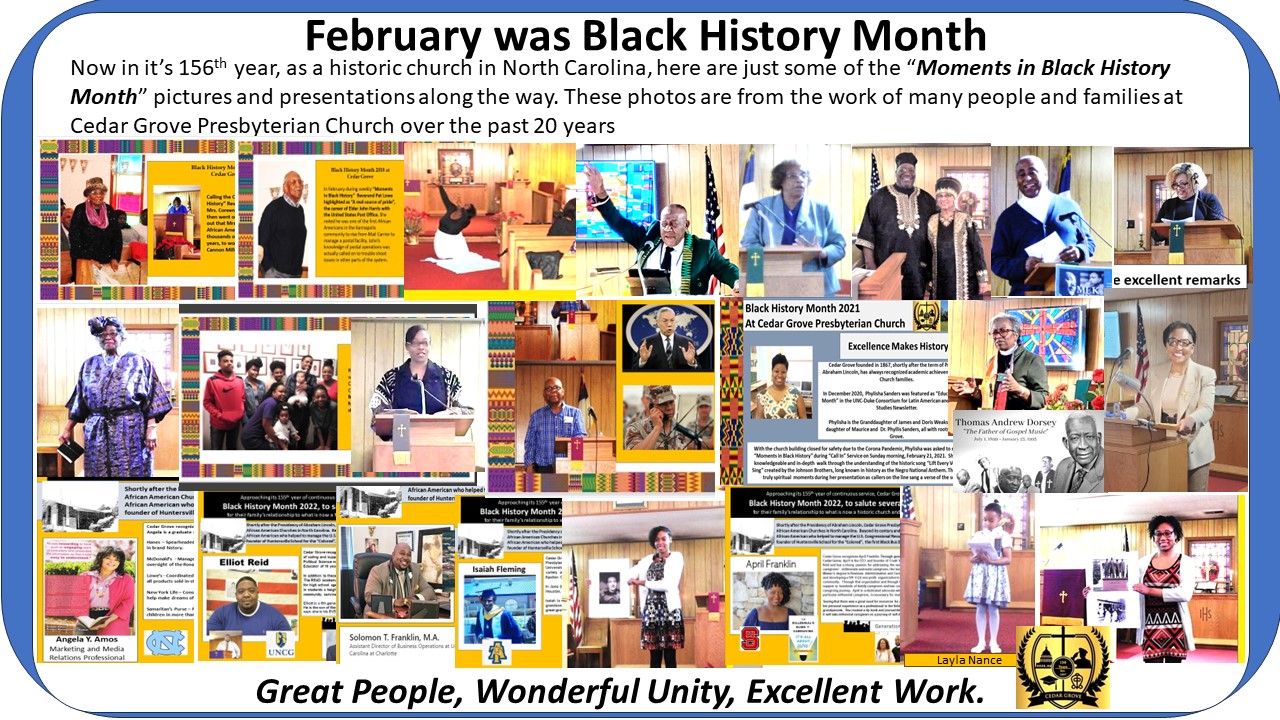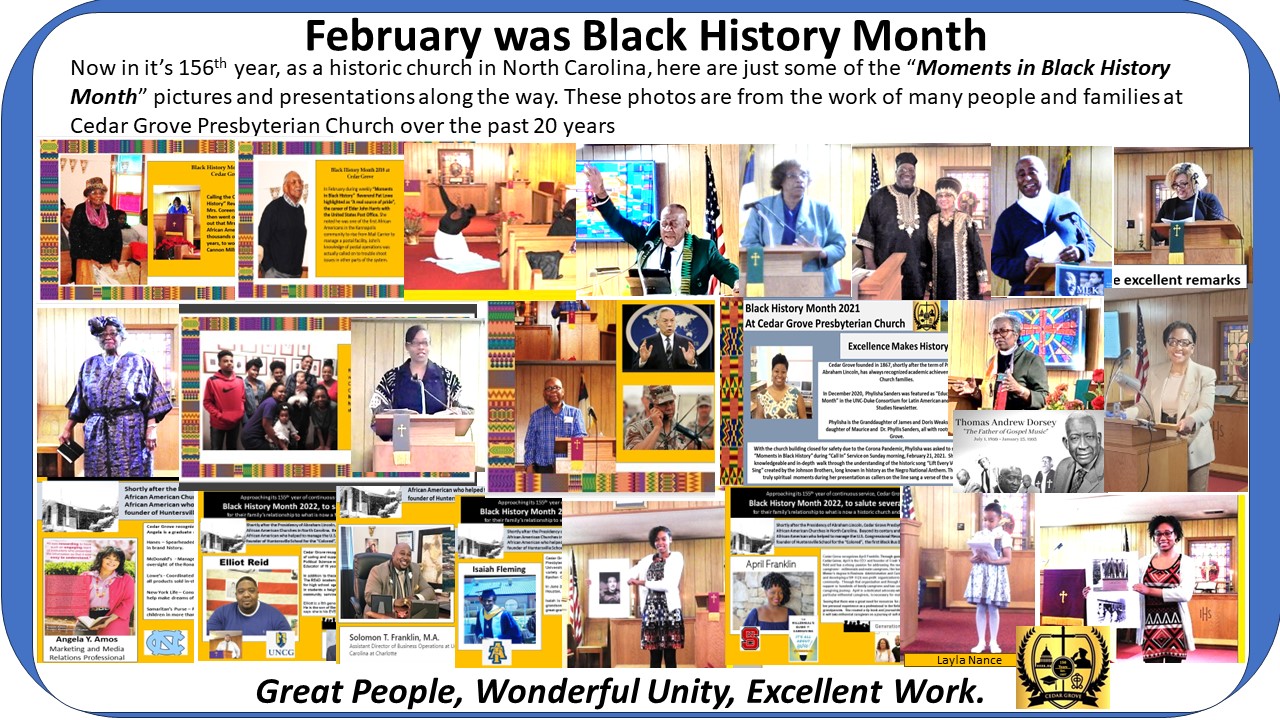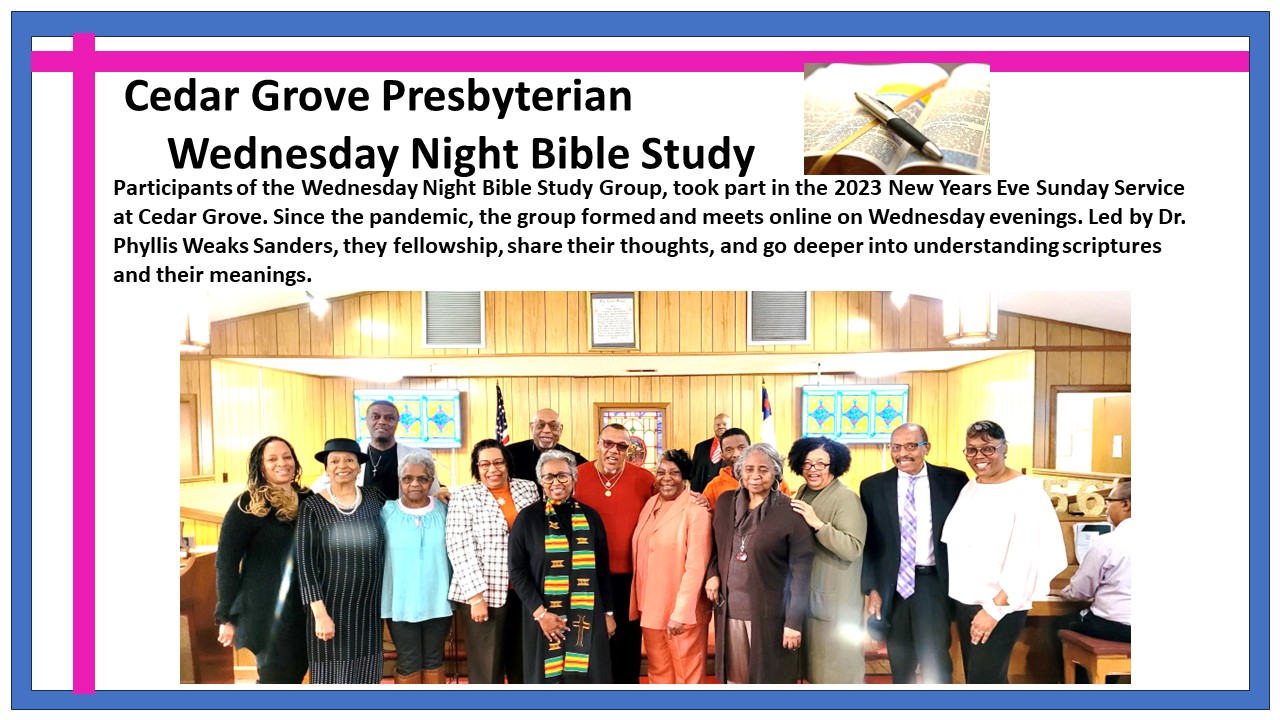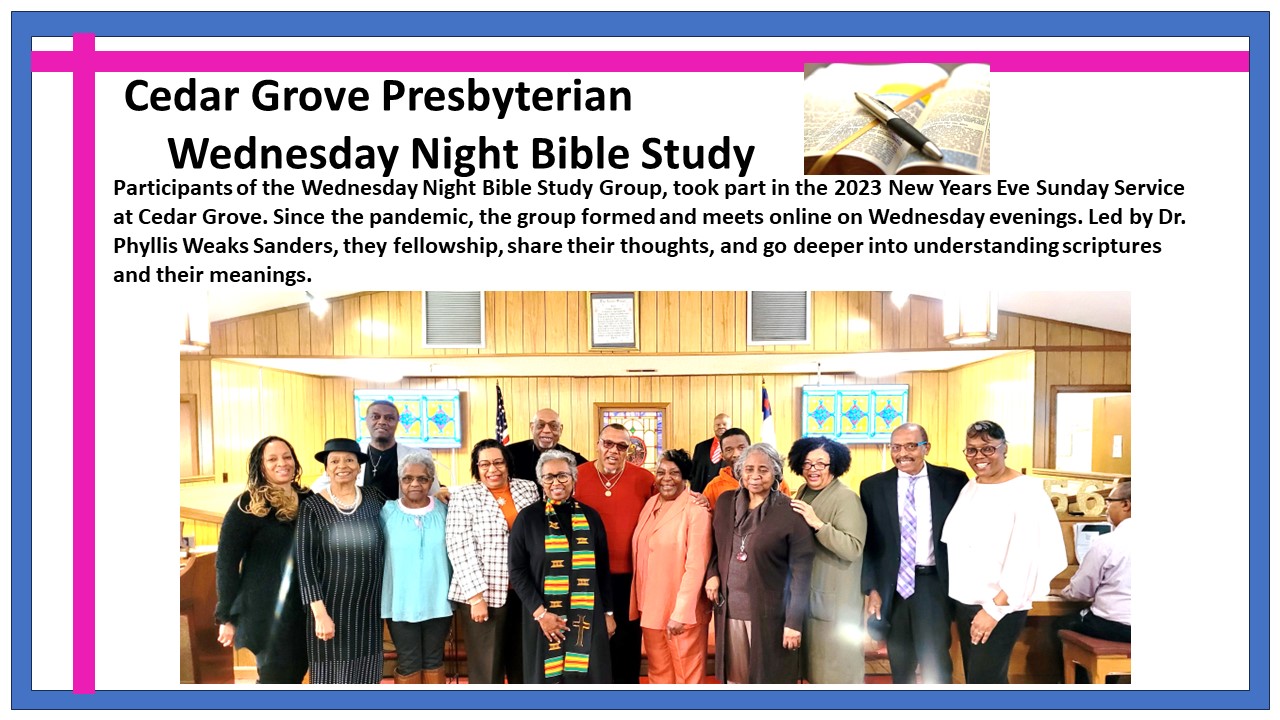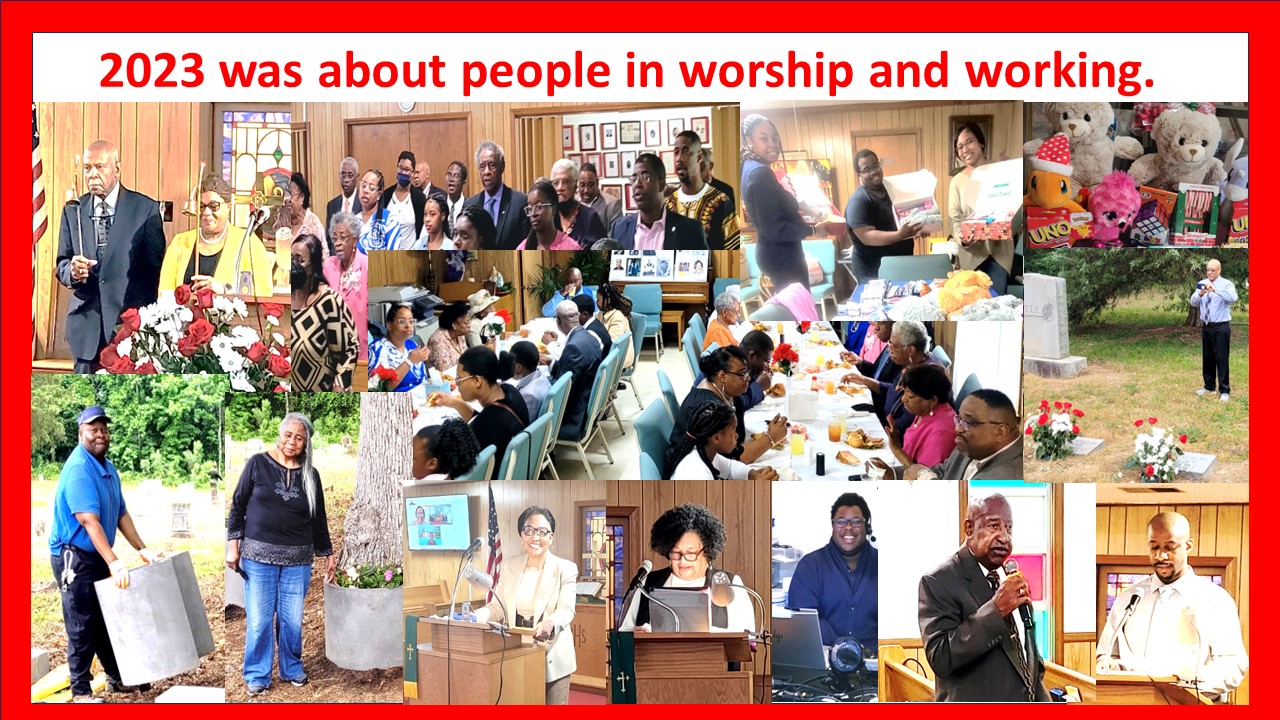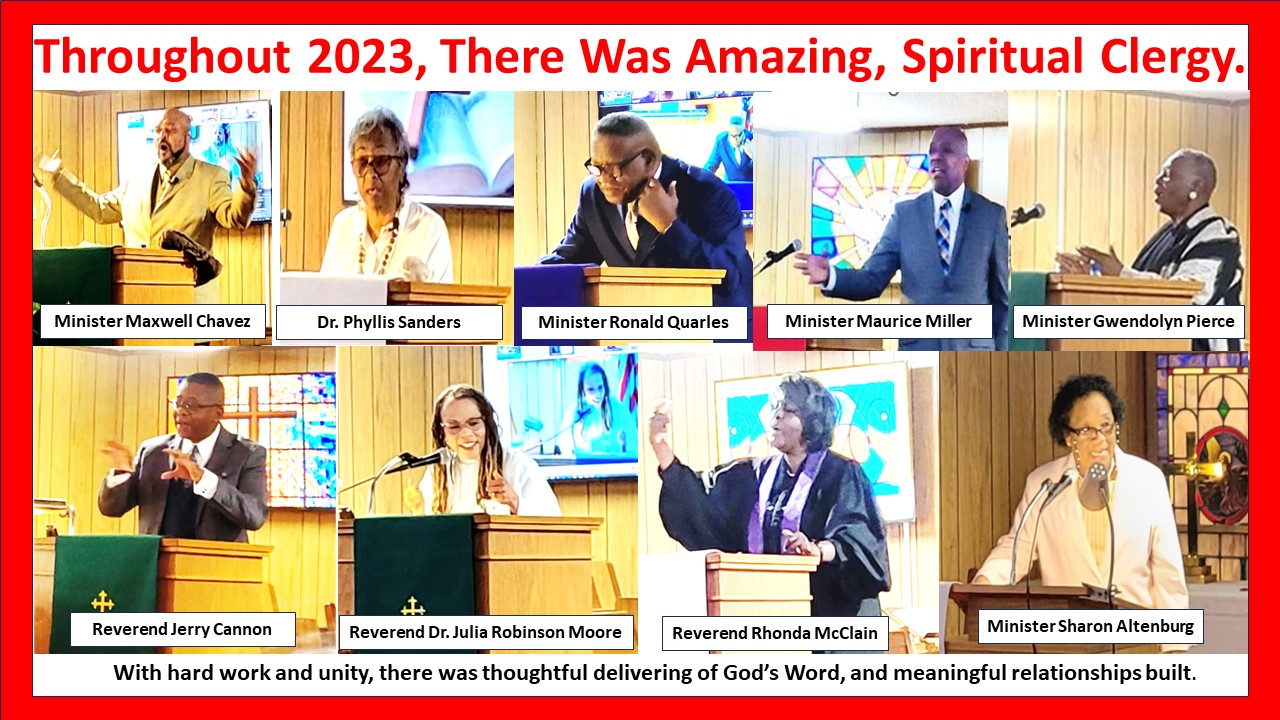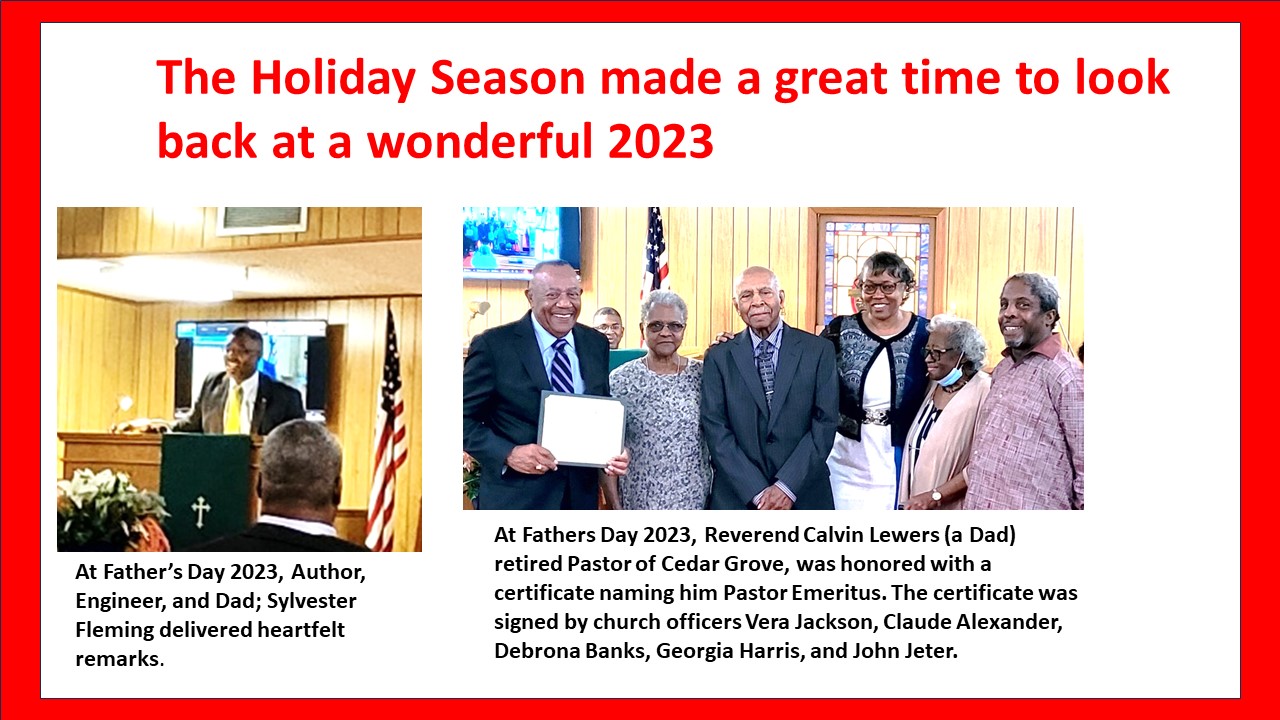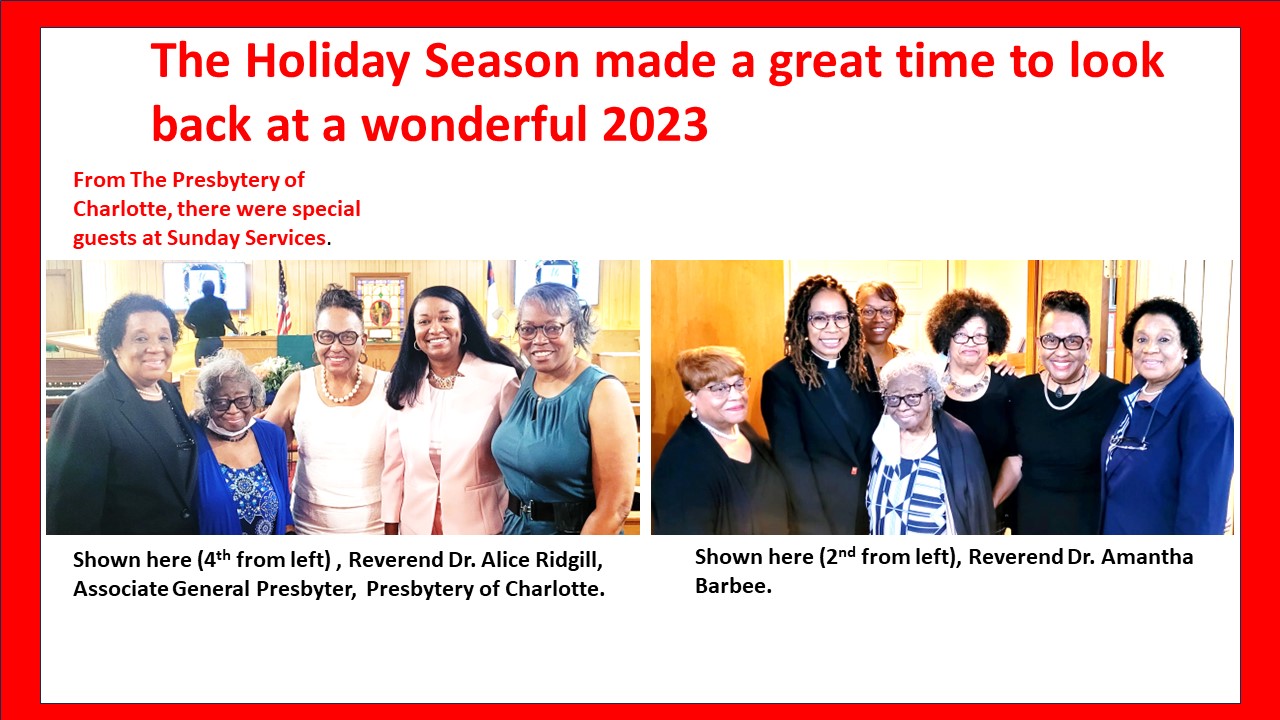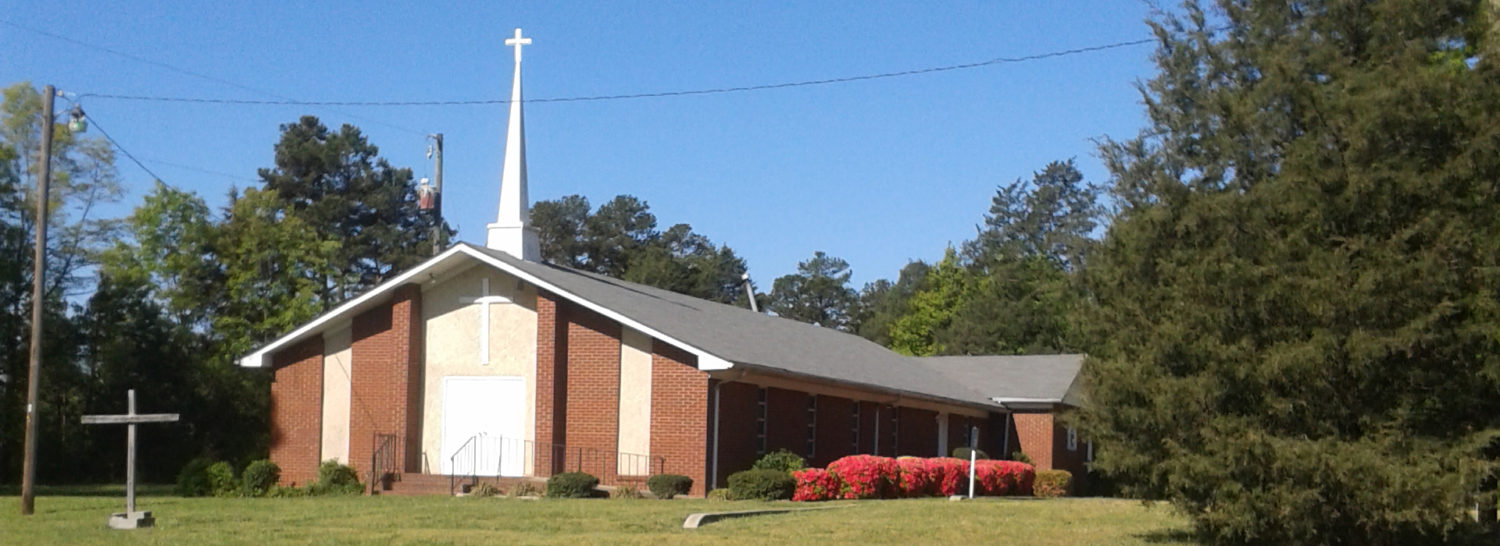
The Cedar Grove United Presbyterian Church, USA, which was called the Poplar Tent Presbyterian Church, USA until 1905, was organized in 1867 under the leadership of Dr. Luke Dorland.
In October, 1866, soon after the United Presbyterian Church, USA, launched its organized program of evangelism and education for the newly liberated slaves, Reverends Samual C. Alexander and Willis L. Miller, founders of Johnson C. Smith University, and S. S. Murkland, former members of the Concord Presbytery of the Presbyterian Church, US, organized the Catawba Presbytery of the United Presbyterian Church, USA. These organizers brought into existence the first all-Negro Presbytery in the United Presbyterian Church, USA. They set in operation the organizational structure for United Presbyterian work in Cabarrus and Mecklenburg Counties. So successful was this venture that by 1875 Catawba Presbytery was ministering to 1,797 communicants, mainly in the two counties mentioned above.
Through the influence of the organizers of the Catawba Presbytery, Dr. Luke Dorland was commissioned by the Freedmen's Committee of the United Presbyterian Church, USA to work with the Freedmen in Cabarrus County, North Carolina. He came South from Toledo, Ohio in 1867 and devoted his life to the beginning of the United Presbyterian work in Cabarrus County. In the same year of his arrival he founded Scotia Seminary, now Barber-Scotia College in Concord, and organized the following United Presbyterian Churches: Bellefonte, in the Rocky River community; Bethpage, in the Bethpage community; Westminster, in Concord; and Cedar Grove, in the Poplar Tent community. These churches began with a combined membership of one hundred and fifty-five, Cedar Grove being the largest with a membership of sixty.
Dr. Dorland dedicated his talents and missionary zeal toward the organization and development of the Cedar Grove Church during the first nine years of its existence. He began his evangelical mission with sixty ex-slaves, the majority of whom had received letters of dismissal from the Poplar Tent Presbyterian Church, US. By 1874, the Cedar Grove Church, USA had increased its membership to one hundred and fifty-eight, the largest during the tenure of Dr. Dorland.
The Cedar Grove United Presbyterian Church reached its membership peak in 1885 when Dr. William E. Partee began his ministry to the two hundred thirty-nine communicants. He remained only two years and in 1886 the membership dropped to one hundred and fifty. The smallest membership, consisting of sixty-nine communicants, was recorded in 1944. Since 1956, the records reveal a steady yearly numerical increase in membership. The financial growth for the same period was phenomenal. In 1978, the membership consisted of more than one hundred devoted persons who were concerned with the continued growth of the Church. The current membership still holds the same concern of Church growth.
According to extracts from the sessional records of the Poplar Tent Presbyterian Church, US, June 1, 1867, the following Negro members were dismissed at their own request: William Faggart, Paul Alexander, Abdon Alexander, I.A.W. Alexander, John Young, Samuel Cannon, Amos Cannon, Samuel Black, Edward Pickens, Alexander Johnson, Warner Turner, Sandy Allison, Peter Irwin, Benjamin Alexander, George Gibson, George Caldwell, Jeri Caldwell, Sandy Gilmer, Zedie Alexander, Fannie Robinson, Cynthia Cannon, Sarah Alexander, R. White, James Grier, William Chapman, Elias Harris, Henry Reed, Ellen Gilmer, Laura Pharr, Minnie Russell, Sarah White, Rhince Alexander, Jane Chapman, Ester Alexander, Jane Phifer, Nancy Margaret Faggart, Susanah Barringer, Julia Ferguson, Jane Eagle, Lucy A. Alexander, John Harris, Martha Harris, Ruben Harris, Annie Harris, Abram Pharr and Nannie Pharr.
The persons listed above are among those who were the nucleus for the founding of Cedar Grove Church. The undaunted faith and dedication of the organizer, along with the ex-slave members, have been conserved in the faithful leaders and members of the Cedar Grove Congregation during the one hundred and fourty-two years of its services to Cabarrus County, the surrounding territory and the Kingdom of God in general.
In recognition of this illustrious history and service of redemption, through the guidance of the Holy Spirit, this congregation is happy to dedicate it's facilities to the service of mankind through Jesus Christ. This moment in history is a timely opportunity to acclaim the marvelous works of the founders and builders, and we look ahead to the future with renewed consecration and dedication.